

Precision in Motion: How CNC Machining Shapes the Future of Modern Manufacturing
please click here:
https://www.uneedprecisionmachine.com/cnc-machining.html
CNC machining is no longer just a process—it's a revolution quietly powering everything from smartphone cases to jet engines. For product developers, engineers, and procurement teams, understanding how CNC machining bridges cost efficiency, scalability, and precision is essential. This article explores the technology's core, its business value, industry contrasts, and future outlook, offering insights that matter from a buyer's perspective.
Understanding the Core of CNC Machining
CNC (Computer Numerical Control) machining refers to automated manufacturing where machines, guided by programmed commands, shape materials into precise components. Unlike manual machining that relies on operator adjustments, CNC uses digital instructions to execute every movement flawlessly.
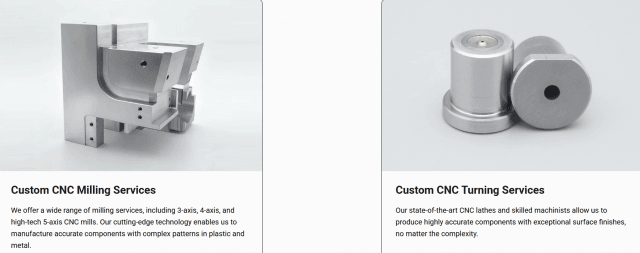
Modern CNC centers can mill, turn, drill, or grind with sub-millimeter accuracy using diverse materials like aluminum, titanium, brass, or engineering plastics. These capabilities make the process a cornerstone for industries such as aerospace, automotive, medical devices, and consumer electronics.
Automation eliminates human error and ensures consistency across thousands of identical parts, enabling manufacturers to maintain high quality while scaling production.
The Technology Behind Precision
At the heart of CNC machining lies the fusion of software and electromechanics. It begins with a 3D CAD model, which engineers convert into a CAM (Computer-Aided Manufacturing) file—a digital map that instructs the machine how to move.
Key elements include:
-
Controllers – The “brain” that interprets the G-code instructions.
-
Servo motors and drives – Provide precise speed, torque, and feedback control.
-
Tool changers – Allow automatic swapping of cutting tools.
-
Coolant and lubrication systems – Ensure smooth cuts and extend tool life.
This integration enables CNC systems to maintain tolerance levels as tight as ±0.005 mm—performance nearly impossible to achieve through manual processes.
Comparing CNC Machining with Other Manufacturing Methods
Procurement teams often face the challenge of choosing between CNC machining, 3D printing, or injection molding. Each method offers distinct pros and cons depending on material, volume, and design needs.
| Feature / Method | CNC Machining | 3D Printing | Injection Molding |
|---|---|---|---|
| Material Range | Metals & plastics | Mostly plastics & resins | Plastics (some composites) |
| Precision | ±0.005 mm (very high) | ±0.2 mm (moderate) | ±0.05 mm (high) |
| Best for Production | Low to medium volumes | Prototyping & complex shapes | High-volume production |
| Surface Finish | Smooth, ready for assembly | Layered, requires post-processing | Smooth, glossy |
| Setup Cost | Moderate | Low | High (due to mold cost) |
| Lead Time | Days | Hours | Weeks |
| Longevity | Long-lasting tools | Limited material strength | Durable molds |
The takeaway: CNC machining balances precision, flexibility, and scalability, bridging the gap between low-volume prototyping and high-quality end-use production.
Why Procurement Teams Trust CNC Machining
Buyers care about more than just precision—they want reliability, repeatability, and ROI. For contract manufacturing, CNC machining offers predictable cost-output ratios, traceability of materials, and consistent turnaround times.
Key procurement advantages include:
-
No minimum order quantities: Ideal for custom or small-batch production.
-
Rapid design iteration: Engineers can tweak CAD designs without high retooling costs.
-
Material certifications: Aerospace and medical sectors benefit from traceable materials and international standard compliance.
-
Supplier reliability: Many CNC service providers now offer quality reports, dimensional charts, and inspection documentation before shipment.
Material Intelligence: Matching Material with Purpose
Choosing the right material is central to CNC success. Different materials behave differently under machining stress and thermal influence.
| Material Type | Strength & Durability | Machinability | Typical Use Case |
|---|---|---|---|
| Aluminum 6061 | Light, corrosion-resistant | Excellent | Drone frames, automotive parts |
| Stainless Steel 304 | Tough, non-corrosive | Moderate | Medical tools, marine equipment |
| Brass | Easy to machine, aesthetic | Excellent | Valves, decorative fittings |
| Titanium | Strong but costly | Challenging | Aerospace and medical implants |
| ABS Plastic | Lightweight, flexible | Excellent | Enclosures, consumer devices |
A strategic approach—considering both mechanical and economic efficiency—can reduce waste and machining time while maintaining quality.
The Psychology Behind Precision Buying
Procurement isn't purely technical—it's emotional. Buyers seek trust, proof, and performance. The “touch and feel” of a finished part often communicates the vendor's credibility better than any quote does.
Modern CNC providers appeal to buyer psychology by offering:
-
Instant quoting platforms with 3D preview verification
-
Transparency in process data (machine type, material origin)
-
Digital certificates and inspection photos before shipment
-
Sustainability metrics showcasing material efficiency or carbon offsets
These features transform traditional purchasing into a data-driven, confidence-building experience.
Advanced Trends Defining the Future of CNC
CNC machining is merging seamlessly with digital technologies to become smarter, faster, and more adaptable.
Emerging directions include:
-
Hybrid manufacturing: Combining CNC and 3D printing for optimal strength and minimal waste.
-
AI-driven optimization: Algorithms predict tool wear and adjust feed rates automatically.
-
IoT integration: Real-time monitoring improves uptime and maintenance.
-
Remote machine management: Engineers can modify tool paths from cloud-based interfaces.
-
Sustainability initiatives: New coolants, recycling chips, and energy-efficient machining processes reduce environmental footprints.
The next decade will see CNC systems evolve into autonomous, data-centric manufacturing cells that can produce high-complexity parts with zero downtime.
Cost Optimization through Smart Design
CNC costs depend heavily on design complexity, tolerance requirements, and material choice. Buyers can lower costs by following a few design-for-manufacturing (DFM) principles:
-
Avoid ultra-deep cavities that require special tooling.
-
Maintain uniform wall thickness to prevent warping.
-
Use standard drill sizes and thread types.
-
Round corners and simplify geometry when possible.
-
Batch parts together to reduce machine setup time.
This approach turns CNC machining into not just a precision tool—but a cost-efficient one that adapts to both prototype and production needs.
Real-World Applications Beyond Industry Norms
CNC machining's precision allows it to move beyond heavy industry and into unexpected places:
-
Luxury fashion: Crafting titanium shoe components or watch cases.
-
Music industry: Producing high-accuracy instrument parts for better acoustics.
-
Renewable energy: Machining wind turbine hubs and solar mounting brackets.
-
Defense: Manufacturing UAV components with stealth geometries and tight tolerances.
Each sector redefines CNC's purpose—from structural integrity to brand differentiation.
Key Questions Buyers Often Ask
-
Which industries benefit most from CNC machining?
Aerospace, automotive, medical devices, defense, and consumer electronics lead the way due to their demand for precision and reliability. -
How does CNC machining compare to laser cutting or waterjet cutting?
CNC machining removes material mechanically and is ideal for 3D-shaped parts, while laser and waterjet are best for flat or sheet materials. -
Can CNC machining handle complex geometries?
Yes. Multi-axis CNC machines (3-axis to 5-axis) can produce intricate surfaces without repositioning the part. -
Is CNC machining environmentally friendly?
Modern CNC machines recycle metal chips, use biodegradable coolants, and can be powered by renewable energy sources, making them increasingly sustainable. -
What impacts CNC machining lead time most?
Lead time depends on design complexity, material availability, and current machine capacity. Simpler designs and common materials are produced faster.
Article Summary
CNC machining empowers modern manufacturing through unmatched precision, flexibility, and scalability. This article reveals how CNC technology, material selection, digital integration, and buyer psychology combine to drive smarter, faster, and more reliable production solutions worldwide.