

please click here:
https://www.certegmachinery.com/product_skid-steer-loader/
When people think of heavy machinery, massive excavators or giant bulldozers often come to mind. Yet, in today's construction, landscaping, and agricultural industries, a far smaller and more agile machine has quietly become indispensable — the skid steer loader. This compact powerhouse offers exceptional versatility, efficiency, and precision, reshaping how worksites operate.
This article explores how skid steer loaders work, what sets them apart from other equipment, and how business owners can strategically choose the right model for their needs.
What Exactly Is a Skid Steer Loader?
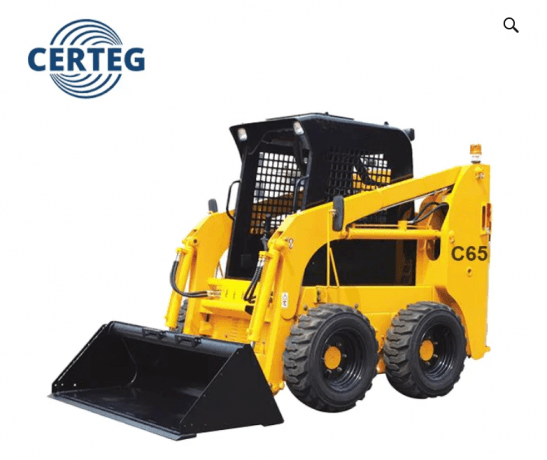
A skid steer loader is a small, rigid-framed machine equipped with lift arms that can attach to a wide range of tools or accessories. Operators steer by skidding or dragging the wheels on one side while moving the other side at a different speed — hence the name “skid steer.”
Despite its compact structure, the machine delivers power far beyond its size. From grading and digging to snow removal and pallet handling, it adapts to nearly any task with the right attachment.
The Psychology Behind the Purchase Decision
For manufacturers, understanding buyer psychology is crucial. When contractors or business owners purchase a skid steer loader, they are not simply buying a machine — they are investing in productivity.
Buyers typically prioritize:
-
Profitability: Can this loader reduce labor time or fuel consumption?
-
Flexibility: Does it support multiple attachments for different tasks?
-
Durability and Reputation: Which brand ensures long-term reliability with minimal downtime?
-
Ease of maintenance: How quickly can filters, tires, and hydraulic components be replaced?
A successful sale, therefore, often hinges more on trust and demonstrated functionality than on aggressive marketing.
How Skid Steer Loaders Differ from Similar Equipment
Many people confuse skid steers with compact track loaders or mini excavators. While they share some functions, each has distinct strengths.
| Feature | Skid Steer Loader | Compact Track Loader | Mini Excavator |
|---|---|---|---|
| Mobility | Uses wheels; excellent on hard surfaces | Rubber tracks; ideal for soft or muddy terrain | Tracks; great for digging but slower on flat ground |
| Versatility | Wide attachment range; excellent maneuverability | Great traction, less tire wear | Specialized for excavation |
| Speed | High travel speed | Slightly lower speed due to tracks | Slowest, designed for digging |
| Maintenance | Easier and cheaper (wheels) | More expensive (track systems) | Moderate due to hydraulics |
| Typical Use | Construction, agriculture, snow removal | Landscaping, grading, slopes | Trenching, demolition |
Skid steers remain the first choice for buyers seeking mobility and all-round capability on firm terrain.
Technology Driving the Modern Skid Steer
Today's skid steers are no longer simple hydraulic workhorses; they are digitally enhanced smart machines. Manufacturers have integrated sensor systems, telematics, and operator-assist technologies.
-
Telematics integration: Real-time data on fuel efficiency, location, usage hours, and fault codes are sent directly to a mobile app or office dashboard.
-
Joystick precision: Electronic joysticks replace mechanical levers, allowing smoother and faster movements.
-
Load-sensing hydraulics: Automatically adjusts power output to match load requirements, reducing wasted energy.
-
Operator comfort: Air suspension seats, noise reduction, and pressurized cabins increase efficiency by reducing fatigue.
Newer models even come equipped with eco-modes to optimize fuel usage — crucial when fuel costs can represent up to 30% of a machine's lifetime operating expenses.
Choosing the Right Skid Steer Loader: Key Considerations
Selecting the ideal model depends on balancing price, performance, and purpose. Here are the essential criteria every purchaser should evaluate:
-
Engine Power: Ranges from 40 to over 100 horsepower. For light landscaping, smaller engines suffice; for heavy lifting or demolition, go big.
-
Operating Capacity: The rated operating capacity (ROC) determines how much weight the machine can safely lift — typically between 700 and 3,200 pounds.
-
Tire Type: Pneumatic tires provide comfort; solid tires endure rough, abrasive surfaces; foam-filled versions offer a middle ground.
-
Hydraulic Flow: High-flow systems enable demanding tasks like trenching or drilling. Check your attachments' flow requirements.
-
Cab Design: Enclosed cabs with heat and AC are ideal for year-round operation, while open cabs are cheaper.
-
Brand Support and Parts Availability: Choose a brand with accessible service centers and reliable logistics.
-
Budget and Total Cost of Ownership: Beyond purchasing price, consider fuel efficiency, maintenance, and potential resale value.
Economic Impact and Cost Efficiency
From an economic perspective, a skid steer loader can yield high ROI (Return on Investment). Instead of purchasing multiple specialized machines, a single skid steer with versatile attachments can handle everything from drilling post holes and trenching to sweeping and hauling.
For small businesses, renting a skid steer loader initially may be smarter than purchasing outright. Rental data also guides long-term investment — frequent rentals indicate that ownership may soon justify itself.
Many equipment financing firms now offer flexible leasing programs that spread costs over time, making high-end models more accessible even for startups.
Productivity Through Attachments
A large part of a skid steer's value lies in its attachments. The same base machine can perform dozens of tasks just by swapping accessories.
Some high-value attachments include:
-
Augers: For drilling holes for fence posts or trees.
-
Hydraulic hammers: For concrete demolition or breaking asphalt.
-
Grapples: For handling debris, logs, or scrap.
-
Buckets: Standard tool for loading, grading, and carrying.
-
Snow blowers: Transform the loader into winter equipment.
-
Sweepers and brush cutters: Perfect for cleaning worksites or managing vegetation.
Manufacturers that offer quick-attach systems make switching tools seamless — reducing downtime between jobs.
Environmental and Sustainability Considerations
Sustainability is now a vital purchasing factor. Many skid steer models are transitioning to lower-emission engines that meet global environmental standards.
-
Tier 4 Final compliance: Significantly cuts particulate and nitrogen oxide emissions.
-
Biodiesel compatibility: Some engines operate efficiently with renewable fuels.
-
Electric skid steers: Emerging as a quiet, emission-free choice, especially for indoor or urban projects where noise and fumes matter.
Firms that publicize sustainability efforts often attract more commercial tenders and government projects. Investing in cleaner machinery is both an ethical and strategic decision.
Brand Landscape: Comparing Global Leaders
Leading global brands continue to innovate. Here's a comparison snapshot of some notable names:
| Brand | Strengths | Ideal For | Unique Feature |
|---|---|---|---|
| Bobcat | Legendary durability, wide parts availability | General contractors | Industry pioneer, intuitive controls |
| Caterpillar (CAT) | Exceptional operator comfort, strong resale value | Large construction firms | Integrated telematics suite |
| John Deere | Agricultural friendly, smooth hydraulic flow | Farm and rural use | Excellent hydraulic efficiency |
| CASE | Easy maintenance, strong mid-range options | Mixed-use fleets | Low operating costs |
| JCB | Innovative side-entry design | Operators prioritizing safety | Quick entry/exit from cab |
The right choice depends on operational goals — reliability, comfort, or cutting-edge tech.
Safety and Training: The Core of Efficient Operation
Training remains the backbone of machine safety. Many accidents involve misuse or lack of familiarity with controls.
-
Operators should complete certified training courses.
-
Daily inspections must cover tires, hydraulic hoses, and attachment couplings.
-
Never exceed the rated lifting capacity.
-
Use seatbelts and safety bars at all times.
-
Maintain clear visibility — mirrors and cameras should be clean and adjusted.
Emphasizing safety not only saves lives but also reduces downtime and insurance costs.
Future Trends: The Next Evolution of Skid Steers
The next decade will bring dramatic changes to how skid steers operate.
-
Autonomous operation: Self-driving modes and automated tasks will reduce the demand for skilled operators.
-
AI-assisted telematics: Predictive maintenance will forecast component failures before they happen.
-
Hybrid and electric drive systems: Lower fuel costs, zero emissions, quieter performance.
-
Modular designs: Allow easier customization for specific applications, from farming to industrial demolition.
Those who adapt early will stay ahead in performance and profitability.
Conclusion: More Than a Machine — A Strategic Asset
A well-chosen skid steer loader enhances every aspect of a business's workflow — time efficiency, cost savings, and task flexibility. Its strength lies not in bulk or horsepower alone but in adaptability. In an era where every job counts, the skid steer loader stands not just as a piece of equipment, but as a smart productivity partner.
Frequently Asked Questions (FAQs)
1. How long does a skid steer loader typically last?
With proper maintenance, most units last between 4,000 and 6,000 operating hours — equivalent to 8–10 years of service.
2. Is it better to buy or rent a skid steer loader?
If you use it often (over 50% of the year), purchasing is cost-effective. Occasional use makes renting a practical choice.
3. What is the difference between radial and vertical lift arms?
Radial lifts provide better reach at mid-heights, while vertical lifts offer higher, straighter lift paths — ideal for dumping into trucks.
4. Are electric skid steers as powerful as diesel ones?
Current electric models can match small to mid-size diesel units in torque but have limited run times per charge.
5. What's the best way to improve skid steer productivity?
Invest in high-flow hydraulics, maintain tires regularly, and train operators to switch attachments efficiently.
Article Summary
Compact yet powerful, skid steer loaders redefine versatility on construction and agricultural sites. With advanced technology, lower emissions, and endless attachment options, these machines combine performance with efficiency, making them essential assets for modern contractors.