

Beyond the Print: Why Sublimation Machines Are Redefining Modern Custom Manufacturing
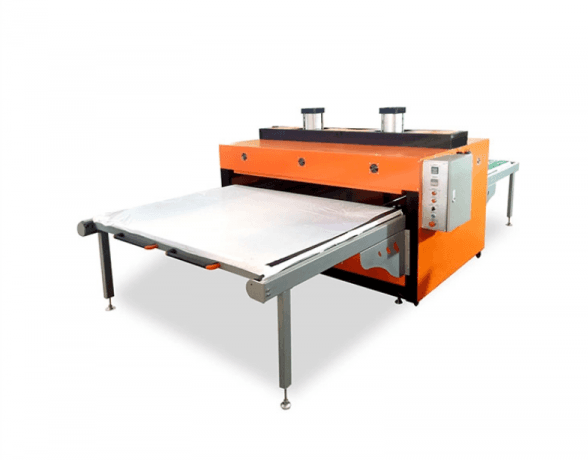
please click here:
https://www.dcsbheatpress.com/large-size-flat-heat-press-machine.html
Personalization has become the soul of modern production. From fashion start-ups printing vibrant designs on polyester T-shirts to industrial firms branding high-performance gear, sublimation machines are quietly changing how products come to life. Once considered niche tools, they now stand at the center of a revolution—blending art, engineering, and commerce in a single thermal process.
Below we dive into what makes sublimation machines a powerhouse technology, how they compare with other printing methods, what to look for before purchase, and why they're fast becoming a must-have for scalable creative businesses.
The Science Behind Sublimation
Sublimation printing is a chemical-mechanical process where solid dye particles convert directly into gas under heat and pressure, embedding themselves into polymer-based materials. Unlike traditional surface printing, sublimation merges the color into the substrate itself, making it impossible to peel, crack, or fade easily.
This molecular-level bonding gives printed items a premium feel and remarkable longevity. Whether for sports jerseys under sunlight or branded mugs frequently washed, sublimation ensures the color remains as sharp as day one.
From Hobby to Industry: The Rise of Sublimation Machines
Just a few years ago, owning a sublimation setup meant hefty expenses and technical know-how. Today, a wave of innovation has pushed sublimation machines into every market segment.
-
Home creators use compact desktop heat presses for customized gifts and small-batch apparel.
-
Medium-sized enterprises rely on roll-to-roll sublimation printers for banners, home décor fabrics, and wholesale T-shirts.
-
Large-scale industries adopt automated conveyor systems capable of continuous transfer at commercial speeds.
This democratization reflects a broader shift: customization as a standard expectation, not a luxury.
Comparing Sublimation Machines With Other Printing Technologies
To understand their appeal, it helps to place sublimation machines next to popular alternatives such as direct-to-garment (DTG) and screen printing.
| Feature | Sublimation Printing | DTG Printing | Screen Printing |
|---|---|---|---|
| Ink Integration | Infuses dye into substrate (gas phase) | Sprays ink on surface | Applies thick ink through mesh stencil |
| Durability | Extremely high—won't crack or peel | Moderate—may fade or wash off over time | Good but depends on ink and fabric |
| Material Compatibility | Works best with polyester, coated surfaces | Cotton and some blends | Most fabrics and surfaces |
| Setup Cost | Medium (printer + heat press) | High (advanced printer, maintenance) | Low to medium (screens, inks) |
| Speed at Scale | Fast for continuous rolls | Slower; print-by-print method | Fast for bulk identical designs |
| Environmental Impact | Low waste; no water or screens | Moderate ink waste | High water and chemical use |
As the table shows, sublimation outperforms alternatives in durability, cleanliness, and long-term cost-effectiveness, especially for synthetic fibers and coated materials.
The Psychology Behind Sublimation's Popularity
Modern buyers crave products that reflect identity. Sublimation answers this emotional need by enabling full-color, edge-to-edge, limitless customization—personal photos on cushions, team logos on gear, or digital artwork on aluminum panels.
Businesses, on the other hand, value consistency and brand reinforcement. When every print turns out identical in shade and saturation, customers build stronger trust in the brand's quality. The combination of emotional satisfaction and professional uniformity drives the booming demand for sublimation products.
Key Components of a Sublimation Setup
A fully functional sublimation system typically includes:
-
Sublimation printer – Equipped with dye-sublimation inks designed for high vaporization temperatures.
-
Transfer paper – Special coated paper holding the sublimation dyes before heat transfer.
-
Heat press – Applies precise heat and pressure to move dyes from paper into the substrate.
-
Software – Ensures design accuracy, ICC color management, and print alignment.
-
Coated blanks or polyester fabrics – The target materials that receive the design.
Each part must be compatible; a mismatch can distort colors or blur details. Professionals know that calibrating printer profiles to match ink chemistry and material finish is the secret to flawless results.
Emerging Trends in Sublimation Technology
The next generation of sublimation machines is reshaping industry standards through:
-
Smart automation – Machines adjust temperature and pressure dynamically using digital sensors.
-
Eco-friendly inks – Water-based and biodegradable formulations reduce environmental footprint.
-
Wide-format capability – Printers that handle 1.8–3.2 meter rolls enable flag, curtain, and interior décor production.
-
UV and hybrid sublimation – Combining UV-laid base layers with sublimation to print on rigid materials like metal and glass.
-
AI-driven color profiling – Predictive software that learns from user habits to maintain perfect tone consistency.
These innovations transform mundane printing into precision manufacturing.
Choosing the Right Sublimation Machine for Your Business
Selecting the ideal sublimation system involves evaluating more than price. Consider:
-
Print size and frequency – Small desktop printers serve low-volume artists, while industrial roll systems fit continuous production lines.
-
Resolution and color depth – Higher DPI means more detail, but also slower printing and greater ink usage.
-
Maintenance requirements – Look for self-cleaning heads or accessible parts to minimize downtime.
-
Software compatibility – Stable print management reduces waste and improves throughput.
-
After-sales service – Training, warranty, and technical support save hidden costs.
Think long-term scalability; a small studio today could evolve into an export-ready workshop tomorrow.
Cost Breakdown: Understanding Full Ownership Expenses
Buying a sublimation machine isn't just about the sticker price. A realistic cost projection should include:
-
Equipment purchase or lease
-
Ink and transfer paper
-
Regular calibration and replacement parts
-
Energy consumption from heat presses
-
Wastage and learning curve losses
While setup costs are moderate, the ongoing margins are attractive. Once the system stabilizes, profit per printed item often exceeds traditional printing thanks to customization value add.
Sustainability and Market Positioning
Sustainability has become a strategic business choice. Sublimation scores well here—it produces minimal waste, requires no water, and avoids messy rinsing chemicals found in screen printing. This appeals strongly to environmentally conscious consumers and provides marketing leverage.
Brands promoting sublimation-based production can position themselves as both ethical and technologically advanced—a rare combination that speaks directly to modern buyers' values.
Real-World Use Cases
-
Textile startups use sublimation to design limited-edition apparel lines without stocking massive inventories.
-
Corporate suppliers produce high-volume promotional materials—mugs, lanyards, signage—with consistent quality.
-
Interior designers create custom wallpapers, curtains, and cushions with digital precision.
-
Sportswear manufacturers deliver moisture-wicking uniforms that stay bright after repeated washing.
Each application builds on sublimation's versatility, proving it's far more than a print technique—it's an adaptive production philosophy.
The Future: Toward On-Demand Manufacturing
When paired with e-commerce, sublimation machines unlock a frictionless model: produce only what sells, print after order, and ship directly. This on-demand manufacturing reduces overproduction—one of the fashion industry's biggest financial and ecological problems.
Expect integration with automation and robotics in coming years, enabling fully unmanned print lines that respond instantly to online orders. The result: less waste, faster delivery, more profit.
Common Problems and Solutions for Sublimation Users
Problem: Colors look dull after transfer.
Solution: Ensure correct temperature and time; check that you're using coated substrates and suitable paper.
Problem: Ghosting or blurry edges.
Solution: Secure paper firmly to substrate; avoid movement during heat pressing.
Problem: Repeated nozzle clogging.
Solution: Perform regular maintenance and store ink cartridges at stable temperatures.
Problem: Uneven pressure distribution.
Solution: Calibrate your heat press and replace worn pads or springs.
Problem: Image doesn't fully transfer.
Solution: Increase temperature slightly or check that substrate's polymer coating is appropriate for sublimation.
Conclusion: Printing the Future, One Color at a Time
Sublimation machines embody the fusion of creativity and capitalism. They empower entrepreneurs to meet customer desires instantly and sustainably, bridging art and commerce through technology. As markets continue to pivot toward personalization and ethical production, sublimation printing stands ready—not as a trend, but as a transformative practice.
Frequently Asked Questions
1. What materials can I print using a sublimation machine?
Primarily polyester fabrics and polymer-coated items such as mugs, metal sheets, and phone cases.
2. Can I sublimate on cotton?
Not directly. Cotton lacks polyester polymers, but pre-treated coatings or sublimation sprays make it possible to some degree.
3. How long does a sublimated print last?
Indefinitely under normal conditions. The color is embedded inside the material, resisting fading, peeling, and cracking.
4. What's the ideal temperature for sublimation?
Typically between 375–400°F (190–205°C), depending on substrate and ink formulation.
5. Are sublimation inks environmentally friendly?
Modern dye-sublimation inks are increasingly water-based and free of harmful solvents, making them among the greener printing options.
Summary
Sublimation machines are transforming manufacturing with durable, eco-friendly, and customizable printing. From home studios to large industries, they combine creativity with efficiency, offering endless design potential and reshaping how products are made and personalized.