

The Revolution of Fabric Printing: Why the Roll-to-Roll Heat Press Machine Is Redefining Production Efficiency
please click here:
https://www.dcsbheatpress.com/steam-heat-transfer-machines.html
In the evolving world of textile printing, innovation drives competitiveness. One machine is standing at the center of this transformation — the roll-to-roll heat press machine. Designed for bulk fabric sublimation and industrial-scale transfer printing, this equipment combines precision, speed, and sustainability in ways that traditional solutions cannot match.
This article explores how roll-to-roll heat press systems are transforming textile production, compares them to flatbed and piece-by-piece heat presses, and helps buyers understand what to look for before investing.
Understanding the Roll-to-Roll Heat Press Machine
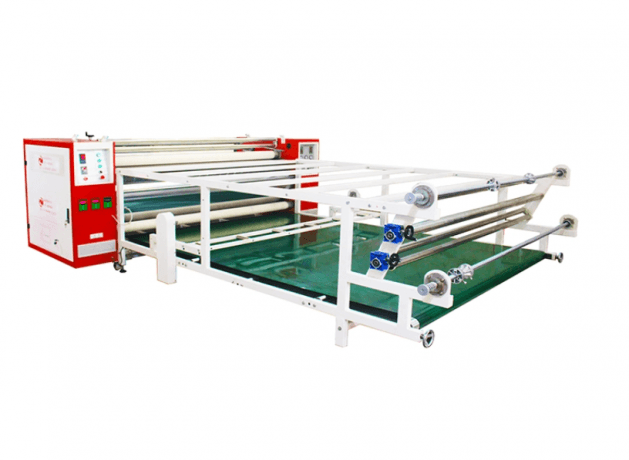
A roll-to-roll heat press machine operates continuously, transferring designs from sublimation paper to fabric using heat, pressure, and time. Unlike flatbed or manual systems, it feeds material from roll to roll, enabling non-stop mass production.
Its main components include a heated drum, conveyor belt, tension control system, and precision rollers. These elements work together to ensure even pressure and temperature, critical for maintaining color accuracy and sharp image detail across large textile volumes.
Common applications span from sportswear, flags, curtains, fashion fabrics, to custom home décor textiles, where consistent print quality directly impacts product value.
Why Roll-to-Roll Printing Outperforms Traditional Heat Pressing
Continuous Operation Means Consistent Output
One major advantage is its non-stop workflow. Traditional flatbed presses require manual placement of each fabric sheet — a time-consuming process prone to alignment errors. In contrast, the roll-to-roll system automatically feeds and winds fabric, allowing uninterrupted production for hours or even days.
Superior Color Reproduction and Fabric Integrity
The machine's even heat distribution ensures deep dye penetration without scorching or color fading. This is particularly vital for polyester-based textiles used in fashion and sportswear, where durability and vibrancy define brand identity.
Labor and Cost Efficiency
Automation reduces manual intervention and operator fatigue. A roll-to-roll setup may require just one technician to monitor multiple rolls in a production shift, lowering labor costs and minimizing waste due to human error.
Comparing Roll-to-Roll with Other Heat Press Systems
The table below illustrates the differences between three popular heat press machine types.
| Feature | Roll-to-Roll Heat Press | Flatbed Heat Press | Piece-by-Piece Press |
|---|---|---|---|
| Operation mode | Continuous, automatic | Semi-automatic or manual | Manual |
| Production volume | High-volume, industrial | Medium to low volume | Small batches or samples |
| Fabric handling | Roll-fed fabric | Cut pieces | Individual garments |
| Heat consistency | Uniform heating over long rolls | Good for small areas | Depends heavily on operator |
| Labor requirement | Minimal | Moderate | High |
| Ideal user | Large factories, print houses | Small to mid-size printers | Custom apparel shops |
| Material compatibility | Wide rolls of polyester, blends | Cut panels and banners | Printed T-shirts, caps, etc. |
Technological Innovations in Modern Roll-to-Roll Systems
Advanced Temperature Control
Recent models include digital PID controllers and multi-zone heating technology. These ensure accurate temperature distribution across the drum, avoiding ghosting, uneven color, or burn marks.
Smart Automation and Sensors
Some systems integrate IoT monitoring, enabling remote control, automatic fabric alignment detection, and printer synchronization. Through built-in sensor analytics, the machine can adjust roller speed or drum pressure in real-time for consistent print results.
Eco-Friendly Engineering
Energy-efficient heating drums and fast warm-up technology significantly reduce energy usage. Additionally, enclosed systems minimize heat loss and fume emissions, aligning with growing sustainability trends in fabric production.
Factors to Consider Before Purchasing
Choosing the right roll-to-roll heat press machine requires clear evaluation of production goals and technical parameters.
-
Drum size: Larger drums enhance speed and allow wider fabric compatibility.
-
Heating method: Oil-heated drums maintain stable high temperatures for long runs, while electric types heat up faster but may vary slightly in consistency.
-
Belt material: Durable Nomex belts withstand heat and maintain grip during long production hours.
-
Pressure system: Pneumatic or hydraulic pressure systems deliver uniformity across fabric layers.
-
Safety features: Overheat protection, emergency stop, and belt deviation sensors safeguard operators and materials.
How the Machine Impacts Business Competitiveness
Investing in a roll-to-roll heat press machine directly improves production throughput and product quality, often leading to faster order fulfillment and fewer reworks. Manufacturers gain flexibility to handle diverse product types—from lightweight scarves to thick upholstery—using a single setup.
Furthermore, automation supports on-demand printing, which is increasingly valuable in a market pushing for personalized and limited-edition textiles. This responsiveness creates strong differentiation in competitive textile sectors.
Roll-to-Roll in Emerging Markets
With the rise of custom fashion, local sportswear brands, and home décor industries, smaller manufacturers across Asia, Africa, and Latin America are adopting scaled-down roll-to-roll models. Mid-range systems now offer industrial reliability at entry-level prices, bridging the gap between small workshops and production lines.
The ability to produce locally with fewer imports or outsourcing needs gives these businesses faster turnaround, reduced shipping costs, and stronger market control.
Maintenance and Longevity Tips
A roll-to-roll system, when well-maintained, can last a decade or more. Regular upkeep ensures continued precision and energy efficiency.
-
Clean the drum surface weekly to remove ink and paper residue.
-
Check belt tension regularly to prevent slippage.
-
Lubricate the roller bearings according to the manufacturer's schedule.
-
Calibrate temperature sensors every few months.
-
Store sublimation paper in a humidity-controlled area to prevent curl.
These small actions significantly extend machine life and reduce downtime.
The Future: Integration with Digital Printing Ecosystems
The next generation of roll-to-roll heat presses will seamlessly integrate with digital sublimation printers for automated alignment, print-data feedback, and maintenance alerts. Smart production lines will soon adjust drum speeds dynamically based on printer output speed, pushing fabric production into a fully synchronized digital environment.
Such advancements position the roll-to-roll system not just as equipment, but as an integral part of a smart textile ecosystem — merging design, printing, and finishing in one streamlined process.
Frequently Asked Questions (FAQs)
1. Can a roll-to-roll heat press handle non-polyester fabrics?
Yes, but only if coated or specially treated. Polyester remains the most suitable base for dye-sublimation because it retains color vibrancy and durability after printing.
2. What is the ideal drum size for mid-scale production?
A drum diameter between 420 mm and 600 mm offers a balance of speed, quality, and manageable energy use for medium production lines.
3. How fast can modern roll-to-roll machines operate?
Depending on width and fabric type, production speeds range from 80 to 180 meters per hour—significantly faster than manual setups.
4. What maintenance costs should I expect annually?
Maintenance typically costs 1–3% of the machine's value, covering belt replacements, sensor recalibration, and general servicing.
5. Can one operator oversee multiple machines?
Yes. With automation and safety systems, a trained operator can manage two or more machines, optimizing factory labor efficiency.
Article Summary
The roll-to-roll heat press machine is revolutionizing textile production with automated, high-volume, and energy-efficient performance. It offers unmatched color consistency, reduced labor costs, and smart integration with digital printing technologies, empowering manufacturers to achieve superior output in competitive markets.